The Real American Hero Who Inspired Rambo and Took On the Deep State
— Jacob Tyler —
In the annals of American heroism, few contemporary figures stand as tall as Bo Gritz. General William Westmoreland once called him “The American Soldier”—a title earned through commanding Detachment B-36 in Vietnam and serving as Reconnaissance Chief for Delta Force. Across guerrilla operations in Southeast Asia, Gritz was decorated 62 times including five Silver Stars, four Bronze Stars, and multiple Purple Hearts.
But Gritz’s most defining legacy came not from battlefield gallantry—but from a mission of conscience.
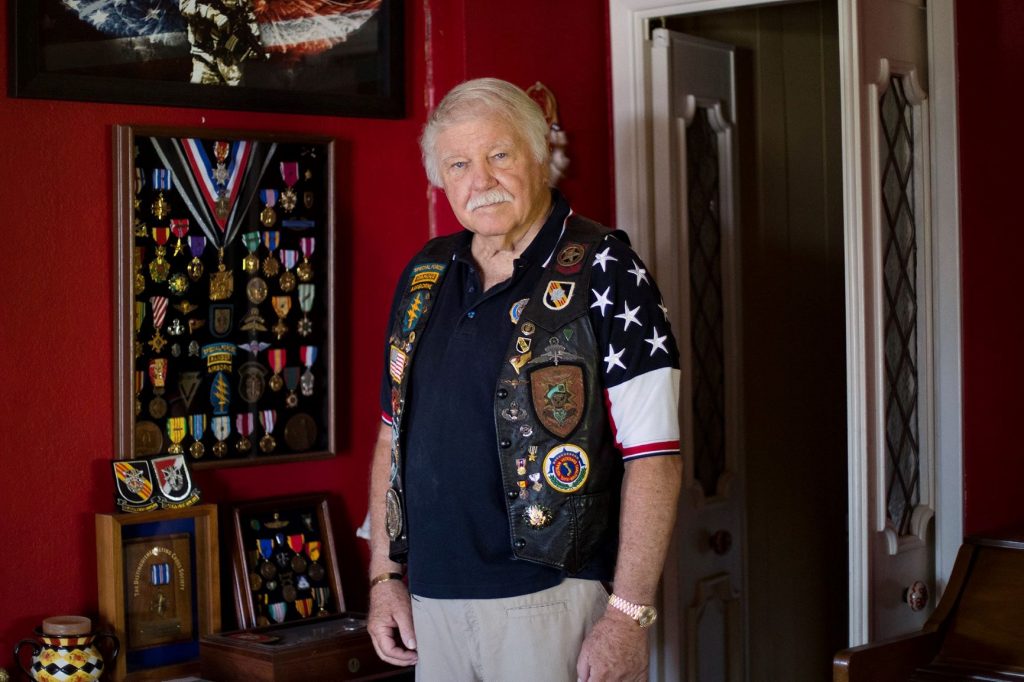
Convinced that American POWs remained captive in Southeast Asia, Gritz launched Operation Lazarus. He assembled a well-funded, elite team and executed a three-phase incursion into Laos. The first phase identified suspected POW sites near Tchepone and Nhommarath. The second recovered compelling physical evidence—including the class ring of Medal of Honor recipient Capt. Lance Sijan. The final phase, Lazarus Omega, began on November 27, 1982, armed with encrypted radios, infrared scopes, and suppressed Uzis for a 14-day rescue plan.
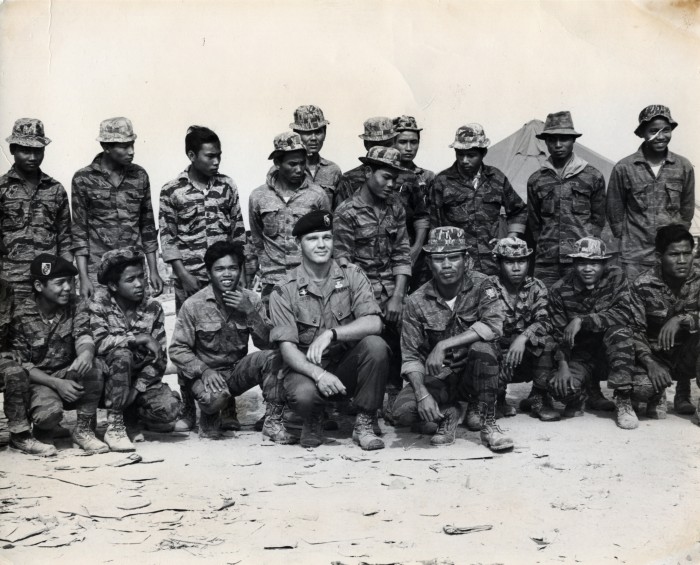
Three days in, disaster struck. Two Laotians were killed, one American captured and ransomed for $17,000. Thai authorities arrested the returning team; Vietnamese officials condemned the incursion.
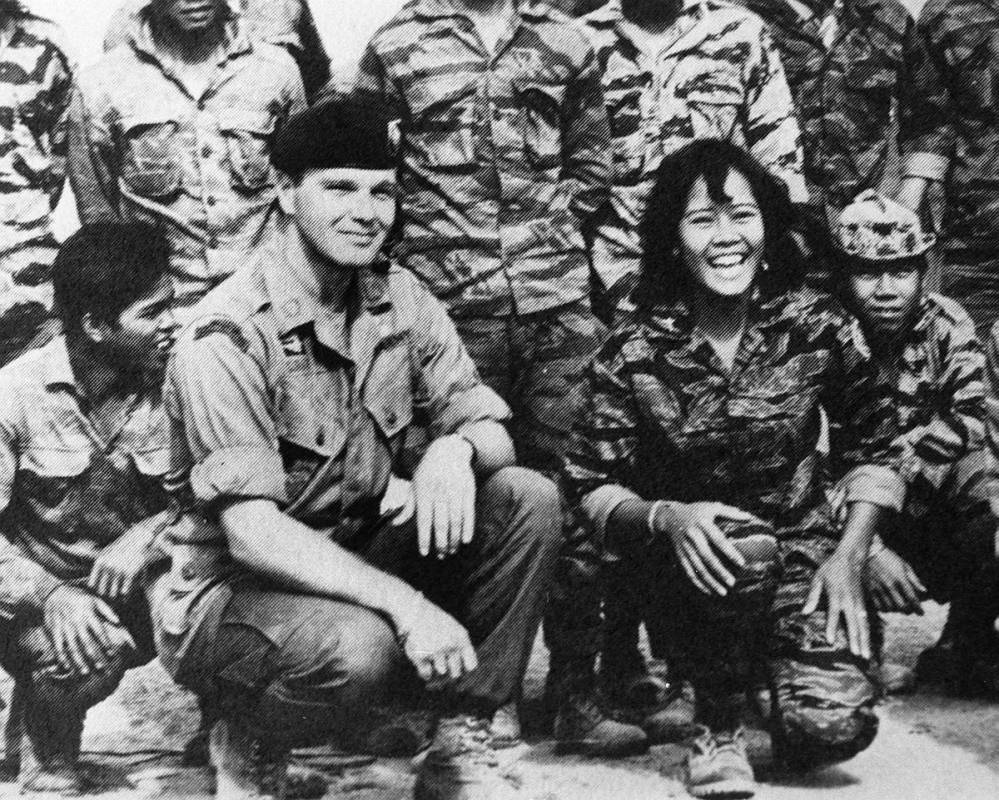
Although no prisoners were freed, Gritz returned with names, photos, and proof—as well as deep suspicions. Multiple military insiders, including Col. Millard Peck, investigator Bill McIntire, and Maj. Gen. John Singlaub, affirmed that the mission was likely sabotaged by Pentagon officials intent on preserving their reputations. Leaks from Voice of America and Soldier of Fortune magazine further compromised the mission; publisher Robert K. Brown later admitted to releasing details “after the fact”—but the damage was done.
In spite of sabotage and censorship, Operation Lazarus ignited public outrage. It attracted high-profile support from Hollywood figures like Clint Eastwood and William Shatner, raising unprecedented awareness about the POW/MIA crisis and the neglect of American veterans.
Gritz’s mission didn’t fail—it exposed a system willing to bury its own. And in doing so, it redefined patriotism as the moral duty to stand, speak, and fight for those the nation left behind.
Exposing the CIA:
A Battle Against Corruption
In addition to his fight for POWs, Gritz became a vocal critic of the CIA, alleging that the agency was involved in drug trafficking to fund covert operations during the Vietnam War. In his book, The Silent War, he boldly called out the CIA for engaging in criminal activities that directly contradicted American values.
“The lines between patriotism and treason have become dangerously blurred by those in positions of power,” Gritz asserted. His work echoed the sentiments of former CIA officers and whistleblowers who recognized that the agency had become entangled in behaviors that not only compromised intelligence integrity but also affected the lives of countless veterans—A phenomenon we spoke of in greater detail in our first issue in our CIA article.
Gritz’s courageous willingness to confront the agency emphasizing the need to hold all parties accountable for their actions further established him as a icon within patriotic circles.
Bo Gritz and the
Patriot Movement
After Vietnam, Bo Gritz emerged as a central figure in the Patriot movement—championing constitutional sovereignty and stepping into some of the most volatile flashpoints of the 1990s.
In 1992, he helped resolve the federal siege at Ruby Ridge, where ATF snipers killed an unarmed woman and a teenage boy, igniting national outrage and exposing the deadly consequences of government overreach. Called in by the FBI, Gritz negotiated directly with Randy Weaver and secured a peaceful surrender.
“He was a soldier. I was a soldier. We got things in common,”
Gritz told press. His intervention likely saved lives and earned him enduring respect among veterans and constitutionalists.
In 1993, Gritz publicly condemned and demanded accountability for the federal assault on the Branch Davidian church and residential community at Mount Carmel near Waco, Texas. Another deadly siege that ended with the deaths of 76 men, women, and children and proved the clear and present danger unchecked Federal agencies posed to the American people.
In 1996, Gritz sought to mediate the Montana Freemen standoff—another tense and climactic confrontation between federal agents and patriotic citizens asserting constitutional grievances. Though he ultimately stepped away, citing theological differences, his involvement reflected a consistent dedication to fighting for his country at home as much as abroad. Pat Shannan’s The Montana Freemen: The Federal Siege That Treated the Constitution Like a Doormat offers one of the most thorough and fearless accounts of the incident.
Gritz’s activism extended beyond crisis zones. He ran for president in 1992 under the Populist Party with the slogan “God, Guns, and Gritz,” advancing a platform focused on constitutional revival and veteran advocacy. He also hosted Freedom Calls, a syndicated radio show blending news, constitutional commentary, and unapologetic patriotism.
Bo Gritz didn’t just speak about liberty—he showed up for it. Whether in Idaho, Montana, or across shortwave airwaves, he consistently stood between the state and the citizen. His legacy in the Patriot movement was built not on ideology alone, but action rooted in oath, courage, and unwavering conviction.
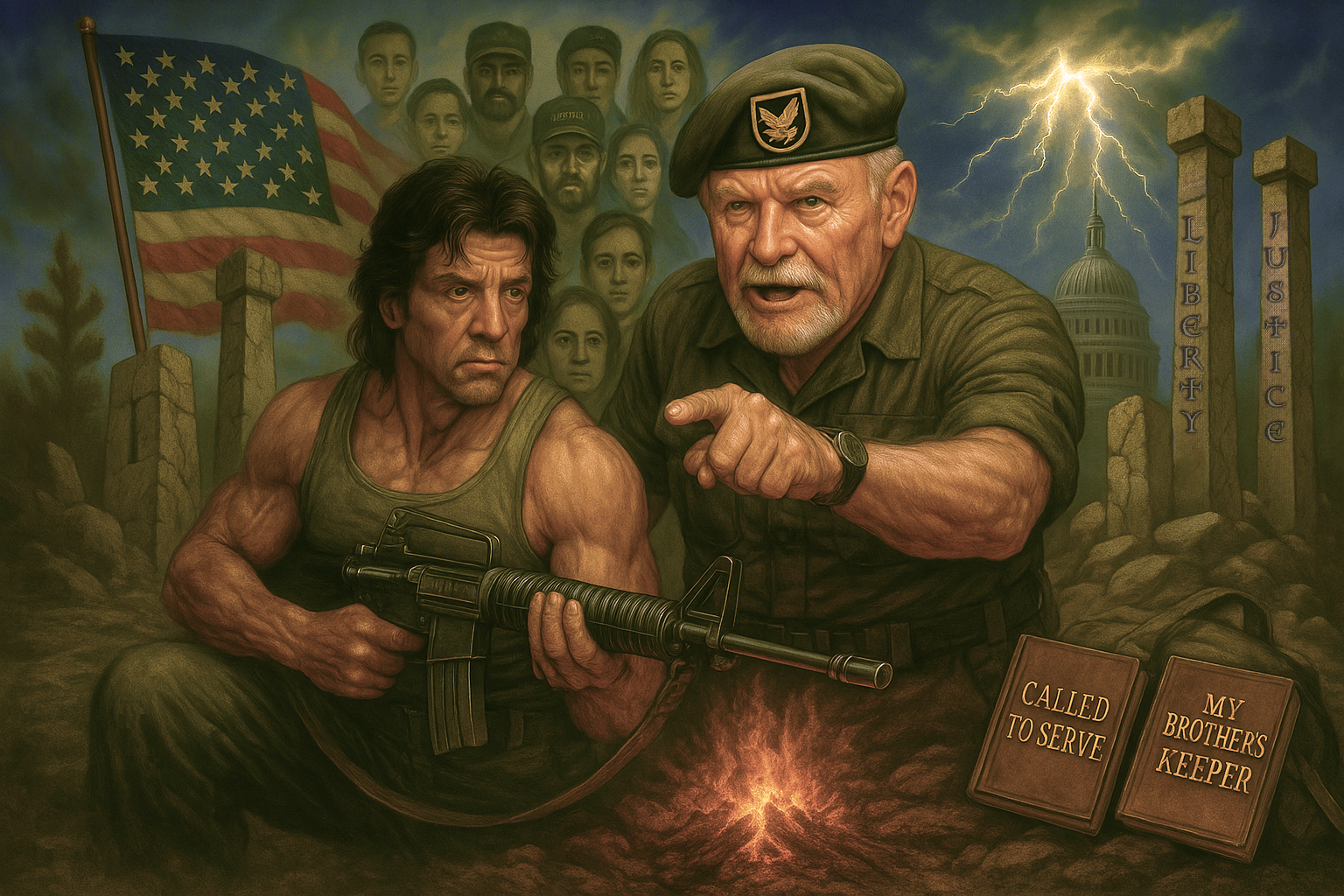
As if all of this was not enough to cement the man’s legendary status, Sylvester Stallone cited Gritz by name as a direct influence on the character of John Rambo, especially in Rambo: First Blood Part II, which mirrors Gritz’s real-life mission to rescue POWs in Southeast Asia. Later films echoed his training of Afghan fighters, his ultra-Christian activism, and even his reclusive ranch retirement. Gritz didn’t just resemble Rambo—he was the blueprint.