
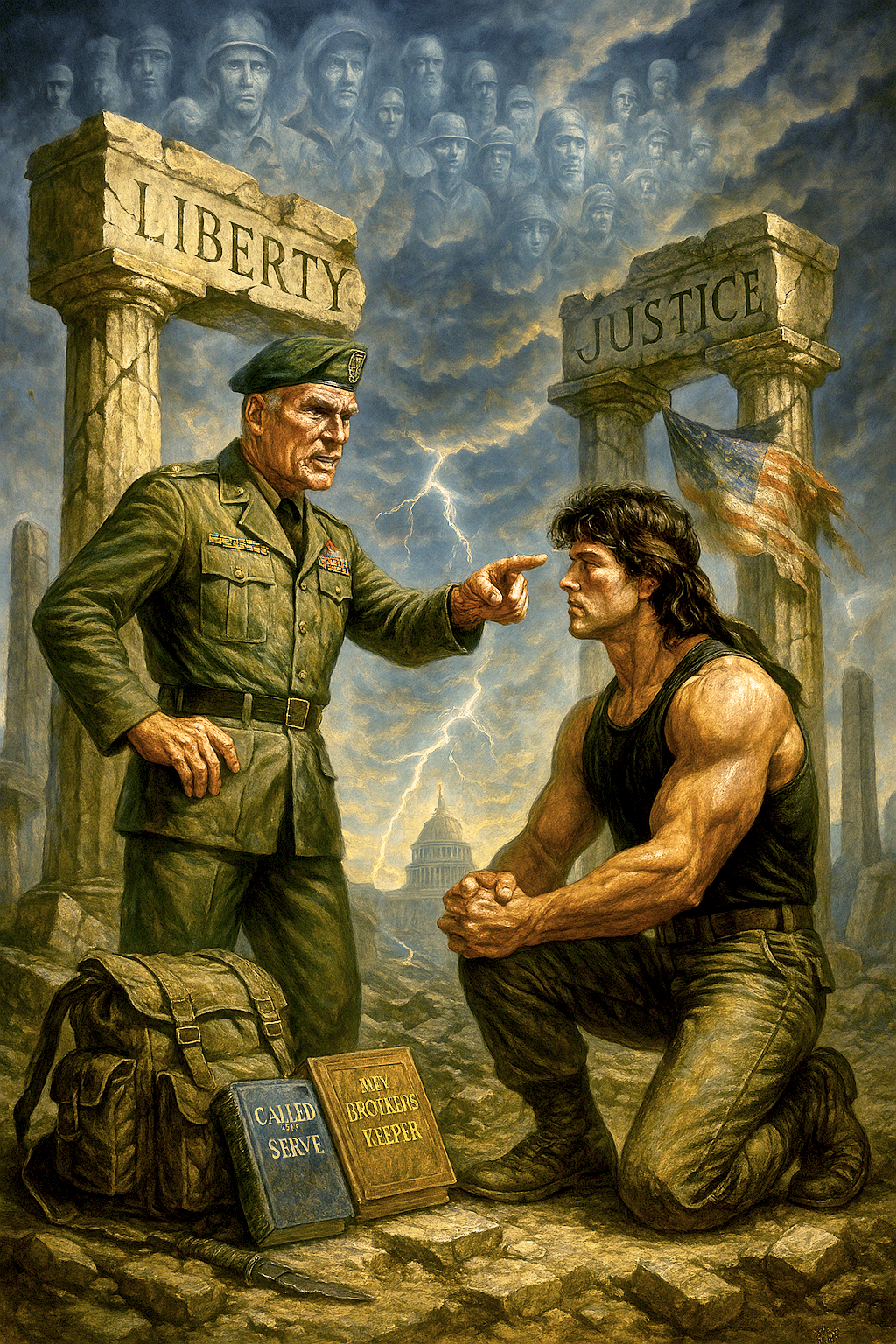
How The Real-Life Rambo Inspired An Entire Genre of Cinema
— Jacob Tyler —
Beneath the shadow of bureaucracy and media distortion, Lieutenant Colonel James “Bo” Gritz emerges not as a relic, but as a rallying standard—an embodiment of the warrior citizen our Republic was designed to defend. Decorated with Silver Stars, Bronze Stars, Purple Hearts, and the scars of over 400 combat engagements, Gritz represents more than military prowess. He embodies the sacred fusion of duty, faith, and fidelity to the Constitution. And whether Hollywood admits it or not, Gritz is the lifeblood of the Rambo archetype—the vigilantly honorable fighter who rises against abandonment and corruption to protect the forgotten.
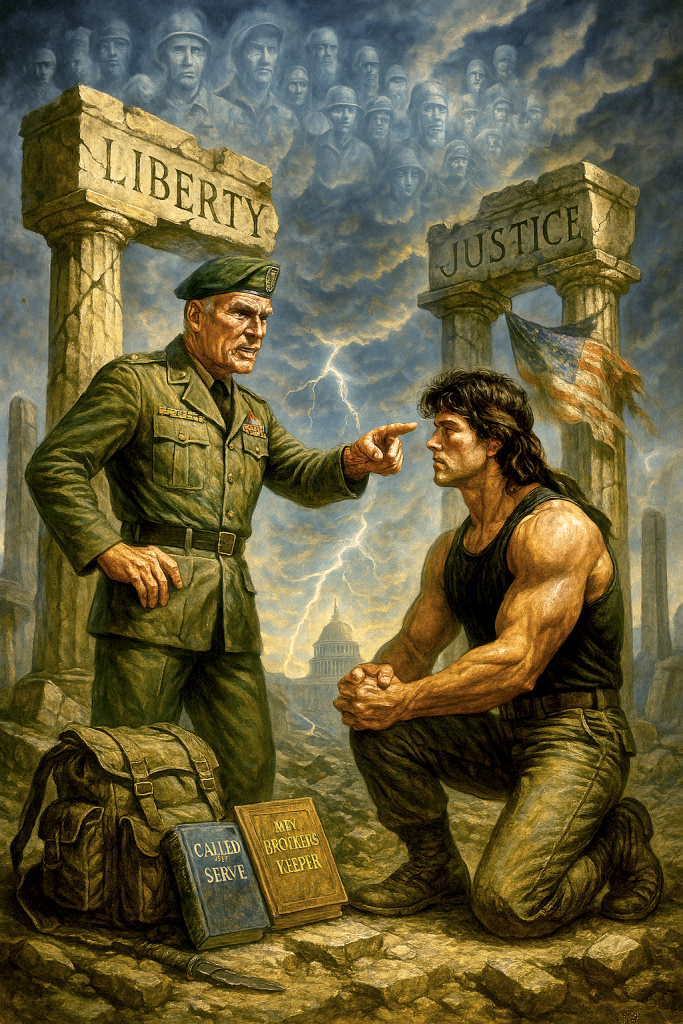
David Morrell may have written First Blood, but Sylvester Stallone’s cinematic transformation of Rambo into a patriotic juggernaut owes a profound debt to Bo Gritz. Stallone himself acknowledged Gritz as “America’s real Rambo,” noting his tenacity, combat record, and POW rescue efforts as direct influences for Rambo: First Blood Part II (1985). The film portrays Rambo returning to Southeast Asia to rescue forgotten soldiers, only to be betrayed by his government—a parallel drawn straight from Gritz’s real-life experiences with Operation Lazarus.
In a 1983 interview with People Magazine, Stallone revealed, “Bo Gritz did what the government wouldn’t. He represents something we’ve lost—a man who answers to truth before title.” Gritz’s battle-worn resolve and contempt for centralized betrayal became the emotional core of the Rambo sequels, injecting moral clarity into what could’ve been just cinematic carnage.
By 1982, with the backing of patriotic celebrities like William Shatner and Clint Eastwood, he launched Operation Lazarus—a daring private mission into Laos aimed at rescuing American POWs. Ambushed and ultimately forced to retreat, the mission ended in bloody controversy. But Gritz never once recanted. “I have the same evidence that might be presented to a convention of clergymen that God exists.” He stated in his testimony before Congress.
That bold declaration wasn’t hubris—it was a manifesto. The man who risked everything to bring home abandoned warriors did so not for fame, but for faith. That same DNA runs through the character of Rambo, and through every disillusioned patriot who chooses truth over silence.
The Rambo Saga: A Cinematic Echo of Gritz’s Life
It’s no coincidence—or perhaps it’s too much of one—that the Rambo saga seems to shadow Bo Gritz’s life with uncanny precision. Each installment of the franchise mirrors a chapter in Gritz’s real-world crusade, as if Hollywood were trailing him with a script in hand.
- Rambo: First Blood Part II (1985): Gritz returns to Southeast Asia to rescue POWs, only to be obstructed by his own government. Oddly similar to Operation Lazarus.
- Rambo III (1988): Rambo trains and fights alongside Afghan mujahideen—a storyline mirroring Gritz’s reports of training Afghan fighters in Nevada under U.S. auspices.
- Rambo (2008): Rambo rescues Christian missionaries in Burma, a cinematic counterpart to Gritz’s post-retirement activism rooted in Christian doctrine and constitutional outreach.
- Rambo: Last Blood (2019): Rambo retreats to a secluded ranch, mirroring Gritz’s own residence in Sandy Valley, Nevada.
To a certain degree, Rambo doesn’t merely echo Gritz—it chronicles him. Each chapter unspools like a dramatized retelling of Gritz’s personal crusade for honor, truth, and national accountability.
Media Inspired by Gritz: The Warrior’s Shadow
Bo Gritz’s influence didn’t stop with Rambo. His persona seeped into multiple cultural properties:
- Colonel Kurtz in Apocalypse Now: Gritz personally advised Francis Ford Coppola during development, offering insight into psychological warfare and military command gone rogue.
- Colonel John “Hannibal” Smith in The A-Team: Gritz’s flair for unconventional tactics and charismatic leadership informed the blueprint of the TV series’ leading character.
- Documentary: Erase and Forget (2017): Directed by Andrea Luka Zimmerman, this probing documentary chronicles Gritz’s influence on media, militarism, and the moral ambiguity surrounding heroism in America. Featured at the Berlinale Film Festival, it opened new international conversations around myth and truth in American warfare.
Gritz isn’t merely referenced—he’s studied. Filmmakers and authors have turned to him as a living artifact of patriotism at its most raw and radical.
The Written Legacy: Gritz’s Books as Manifestos
Bo Gritz didn’t just live the story—he wrote it. His two major works remain definitive readings on constitutional betrayal and activist reckoning:
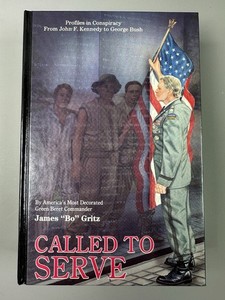
- Called to Serve (1991): A blistering exposé spanning 671 pages. Gritz chronicles covert operations, CIA drug trafficking, and systemic rot. His central thesis: the American people are being lied to, and truth is the first casualty of centralized control.
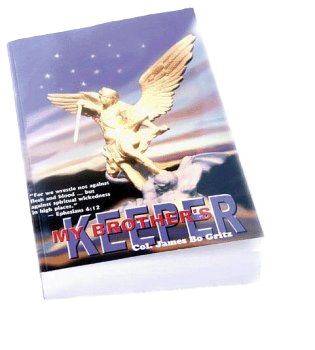
- My Brother’s Keeper (2003): A 655-page continuation of Gritz’s war against misinformation, covering Ruby Ridge, the Montana Freeman intervention, and grassroots activism. It’s less autobiography, more doctrine: outlining a path for moral citizens to reclaim their republic.
These texts form the intellectual scaffolding of Gritz’s movement. Not just memoirs—they’re a summons.
A Living Archetype: Gritz as Cultural Compass
Bo Gritz is more than a man—he’s a cultural compass pointing toward a forgotten ideal: the warrior who fights not for conquest, but for conscience. His life, echoed in Rambo and refracted through media, reminds us that the battle for liberty isn’t waged in theaters—it’s fought in the hearts of those who refuse to surrender truth for comfort.
He remains a lightning rod of controversy and a beacon for truth-seeking and patriotic citizens. The bureaucrats may dismiss him. The press may distort him. But Gritz is still standing—green beret pulled tight, resolve carved from granite, pointing forward into the storm.