How Grit, God and Guerilla Tactics Changed the Rules of War | The Tactical Legacy and Historical Impact of Benjamin Church
Benjamin Church wasn’t just a renowned and highly effective warrior—he redefined how Americans would fight for generations. In the dense forests and swamps of New England, Church realized that European military doctrine—tight formations, volley fire, and ceremonial marches—was a death sentence against an enemy who rejected the unflinching decorum of gentleman’s warfare.
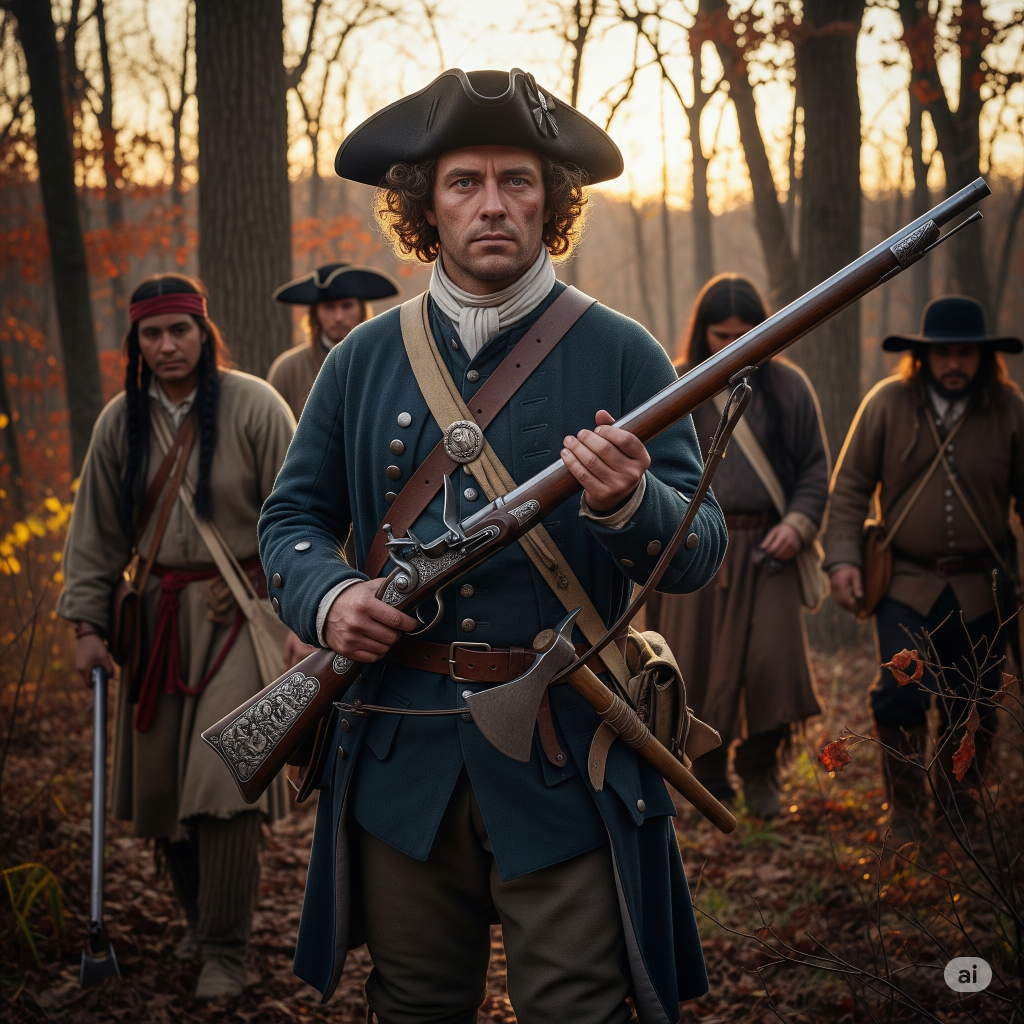
So he broke ranks—literally—and built something new: small, mobile units trained in stealth, speed, terrain mastery, and surgical, asymmetrical strikes.
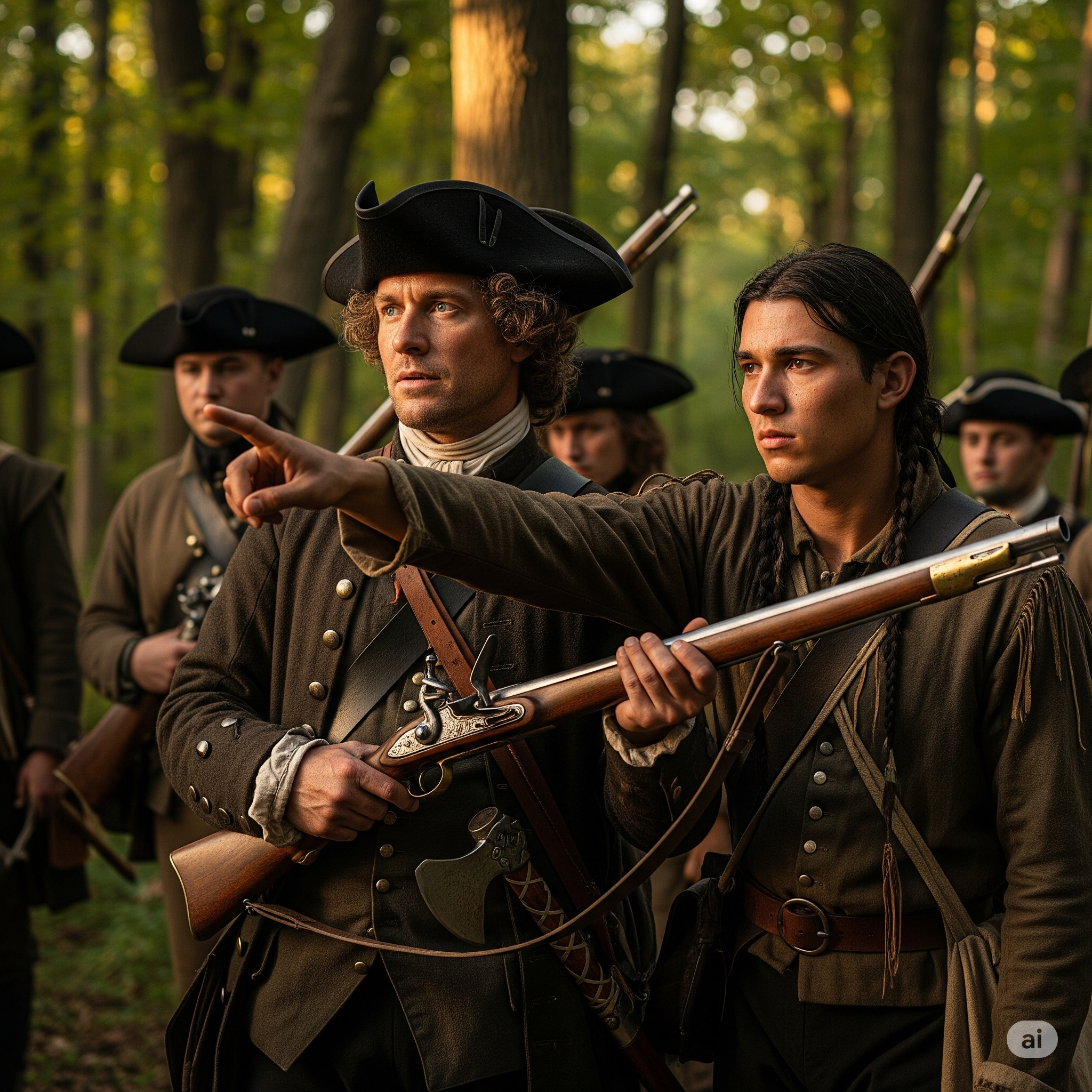
Church’s ranger teams were the first colonial force to successfully raid hostile camps deep in enemy territory. He recruited Native allies, trained his men in guerrilla tactics, and led from the front. His success in King Philip’s War, including the decisive operation that led to the death of Metacom, proved that irregular warfare could outmatch conventional forces in the American wilderness.
His methods weren’t just effective—they were revolutionary. Church pioneered a frontier combat model rooted in adaptability, precision, and moral restraint, setting the stage for generations of tactical patriots and special operators to follow.
Tactical Loadout and Combat Philosophy
Church’s battlefield kit was chosen for survival, not ceremony. He carried a flintlock musket, a powder horn, and a cartridge box, all optimized for reload speed and mobility. His men wielded belt axes, tomahawks, and hunting knives, each serving double duty as tool and weapon in close quarters.
He personally designed whaleboats for amphibious raids and specified the kind of hatchets to be carried during his campaigns in Acadia.
Church’s loadout philosophy mirrors modern tactical kits: lightweight, modular, and mission-specific. He emphasized terrain awareness, gear discipline, and silence over ceremony. His troops were fast, elusive, and lethal—trained not only to strike hard, but to strike wisely.
More than equipment, they carried a code: never harm non-combatants, never destroy without cause, and never fight for personal glory—fight for order.
A Legacy That Shaped Centuries of Warfare
Church’s tactical blueprint echoed loudly across generations. His ranger units directly influenced:
- Robert Rogers’ Rangers, who formalized his principles in the Rules of Ranging (1757). Rogers’ Journals of the Rangers (1765) further showcase how much Church’s doctrine shaped his thinking. These texts became foundational: read aloud to the 1st Ranger Battalion before combat in World War II, and adapted by the 75th Ranger Regiment today.
- Gorham’s Rangers, formed in 1744 by Captain John Gorham III, were Church’s tactical heirs. Initially composed of Wampanoag and Nauset warriors, they specialized in reconnaissance, amphibious raids, and frontier guerrilla warfare across Nova Scotia. Their whaleboat operations, discipline, and disguise tactics—posing as Acadian fishermen—made them a feared force during King George’s War, Father Le Loutre’s War, and the French and Indian War.
- Over time, they became a prototype for Rogers’ Rangers and helped solidify British control of the region. Scholars such as Brian D. Carroll and the Nova Scotia Archives note that Gorham’s unit wasn’t just a combat team—it was a tactical evolution born directly from Church’s legacy.
Church’s memoir, Entertaining Passages Relating to Philip’s War (1716), is considered by some historians to be America’s first military manual, documenting not just campaigns but a complete philosophy: plan meticulously, strike surgically, and lead with moral clarity.
Why Church Still Matters Today
Church’s legacy isn’t confined to dusty archives—it lives in the tactical ethos of modern U.S. Army Rangers, whose creed reflects Church’s fusion of Native-inspired strategy and Christian conviction. His spirit persists in elite defenders who strike swiftly, move smartly, and temper ferocity with faith and moral control.
For gun owners, defenders of liberty, and students of tactical discipline, Church offers the ideal: rugged manhood, moral restraint, and strategic brilliance. He was a man of faith who fought with precision. A leader who spared innocents yet answered duty’s call without hesitation. A tactician who trained his men to be dangerous by choice—not impulse.
His example calls Americans to be ready, be principled, and be capable. In a world of rising uncertainty and values under siege, Church remains a timeless model for peace through strength—at home and abroad.
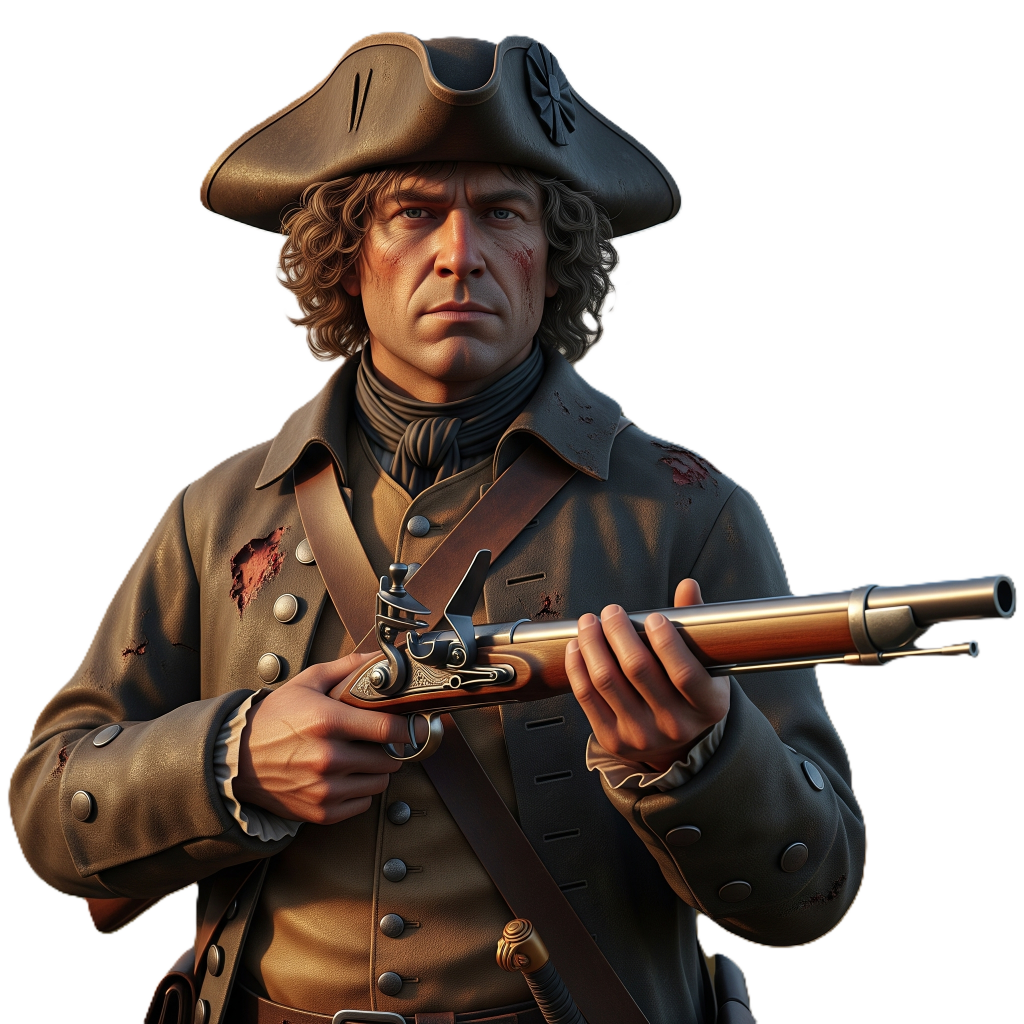
“That I might be a service to the country, I found myself engaged beyond retreat.”
— Church’s Memoir