FORGOTTEN HEROES AND LEGENDS OF GUN HISTORY: The Sharpshooter Who Turned the Tide At Saratoga
— NFCT Editorial Staff —
In the autumn of 1777, the cause of American independence was a candle in a gale. General John Burgoyne swept south with a plan to cut the colonies in two — a success that would have spelled disaster for the Continental army and the militias facing the British Empire. Things were looking bleak for the Revolution, but at the Battle of Saratoga a single man who embodied the martial soul of a nation still finding its identity would change the course of history. That moment was only one of many in a life built on riflecraft, faith, and frontier resolve
Born to the Backcountry
Born in 1751 to Irish immigrants carving a life out of Pennsylvania’s hill country, Timothy Murphy learned colonial riflecraft the way other boys learned a plow — by doing it until it became second nature. The Pennsylvania Long Rifle demanded patience, precision, and an almost liturgical attention to detail.
As everyone did at that time, he had learned to shoot a musket from a young age, but Murphy would soon gain a reputation as an exceptionally talented marksman.
Raised in a Presbyterian home in a community steeped in the Reformed tradition, neighbors and later county histories recall a frontier fighter whose faith gave him the moral clarity to act when others hesitated.
A Chosen Man
Murphy didn’t wait for war. He enlisted with the Northumberland County Riflemen and survived the brutal year of 1776 — Long Island, the winter, Trenton and Princeton. His marksmanship and nerve earned him a place in Daniel Morgan’s elite Corps of Riflemen, where he quickly became a leader.
Daniel Morgan was no ordinary commander. After surviving 499 lashes from a British whip — one short of the customary 500 — he joked the British still owed him the last stroke. Morgan didn’t recruit; he culled. His standard was unflinching and exacting: a seven‑inch target at 250 yards. To be chosen by Morgan was to be counted among the best.
The Shot Heard ‘Round Saratoga
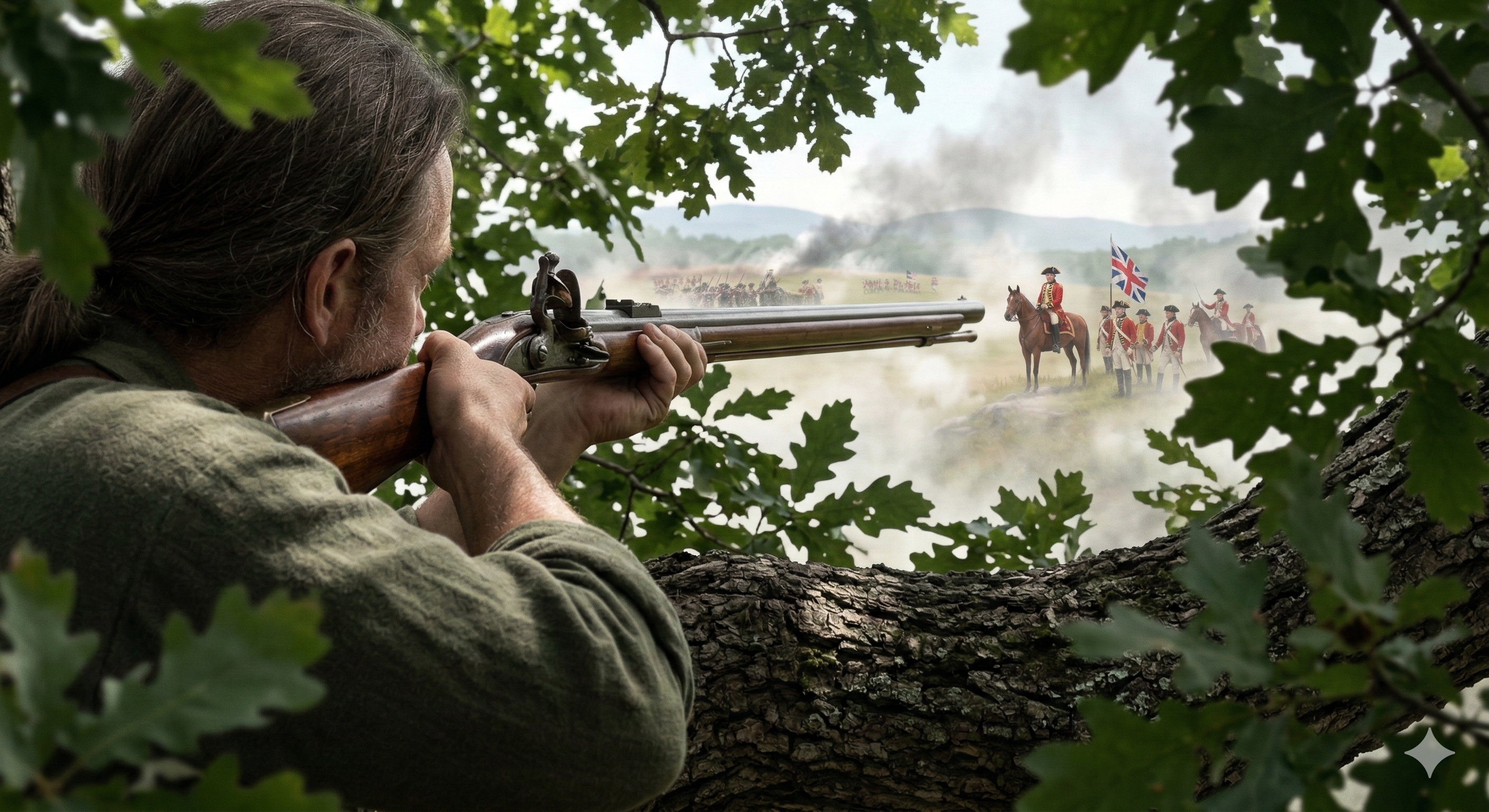
At Bemis Heights, the British onslaught was led by one of England’s finest commanders in the colonies, General Simon Fraser. His presence on the battlefield caused such a stir that he was quickly noticed by Benedict Arnold, whose own bravery that day is the stuff of legends. Seeing how effectively Fraser was rallying the British troops, Arnold said to Col. Dan Morgan, “That officer on the gray horse is a host in himself and must be disposed of.” Morgan selected a small squad of his best riflemen, along with Murphy and pointed to Fraser saying “I admire and respect him, but it is necessary for our good that he should die.” Murphy climbed a nearby oak tree and took aim at Fraser. After a couple of sighting shots, he delivered a fatal hit that dropped Fraser to the ground. The British formation, seeing their charismatic commanding officer fall, lost their resolve and withdrew, winning the day.
In light of Saratoga’s significance and the role Fraser’s sudden death played in the Continental Army’s victory, this single shot arguably changed the course of the war and thereby American history as well.
The “Magic” Gun
As time passed, Murphy would go on to serve on the frontier, protecting settlers from Amerindian and Tory attacks. While serving in New York, Murphy acquired a highly irregular weapon for the time: a swivel barreled flintlock called the Golcher rifle — an engineering marvel that allowed him to fire, rotate the barrel, and fire again with unheard‑of speed. Consequently, Murphy gained a fearful reputation among Amerindian warriors as the man with a “spirit rifle” whose gun never had to be reloaded. Some accounts indicate it having a similar psychological impact on some British soldiers as well — who were purportedly so baffled and bumfuzzled by its novel two shot capacity that they dubbed it a “devil” or “magic” gun.
A Watchman of the Frontier
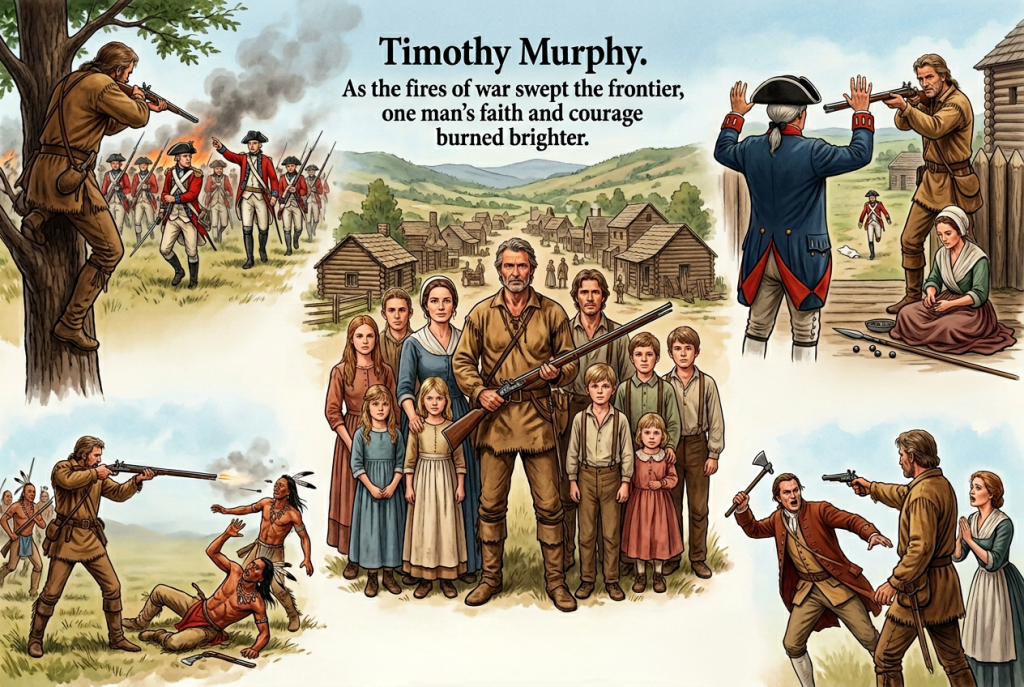
Murphy was a man of the Book, and he saw no contradiction between his faith and the necessity of violence. He understood that the biblical mandate to protect the weak requires more than prayers; it requires the iron will to use lethal force. When he tracked down a particularly loathsome Tory raider named Service at his home, the man’s wife begged for mercy. While listening to the woman, Service grabbed a tomahawk and lunged at him, and without hesitation Murphy put him down. Having ended the feared marauder’s reign of terror, he famously said to the widowed woman, “Mother, he shall never sleep with you again.”
Sedition Rather Than Slavery
In 1780, Murphy was stationed at the Middle Fort. The fort’s garrison was only 50 or so men, and facing an enemy force of 800, the commander was about to accept terms of surrender. But duty did not end here for Murphy. He fired on the British flag-bearer, and when threatened with execution for sedition, then leveled his rifle at his own commanding officer, informing him that he would sooner execute a coward than watch the fort fall. His wife, Peggy, sat near him calmly molding musket balls all the while, later saying she would pick up a spear and fight at her husband’s side when the ammo ran out. The garrison stood its ground, and unwilling to risk a costly frontal assault, the British withdrew.
An Enduring Legacy
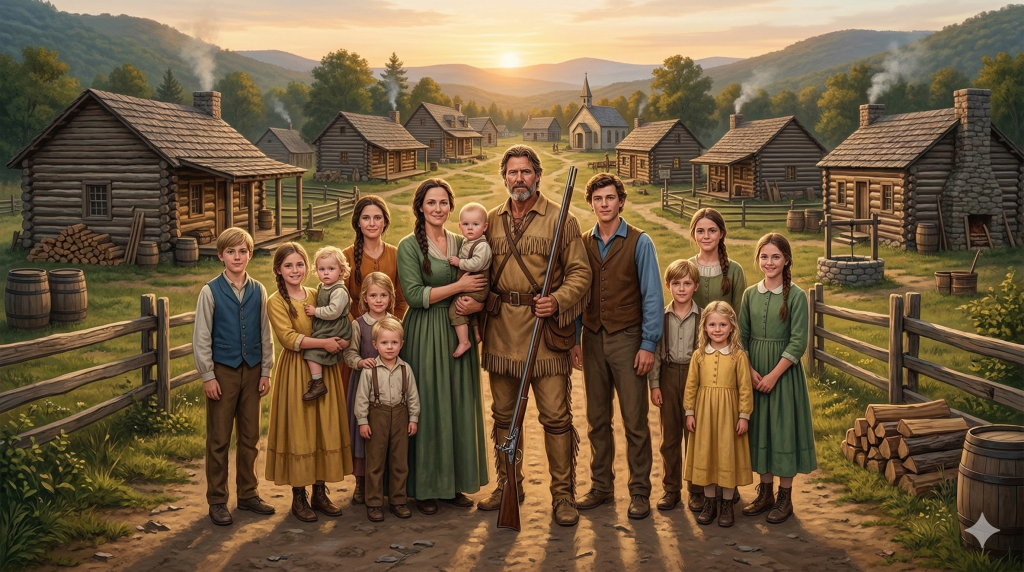
In time Murphy would settle down for the life of a farmer and patriarch, living to the age of 67 and siring 12 children. His grandson would eventually serve as the Governor of New York.
His enduring legacy is living proof that the American story is one of guns and grit as much as as it is one of pens and principles. Murphy’s life and legacy is the embodiment of a remarkable combination of both.