FORGOTTEN HEROES AND LEGENDS OF GUN HISTORY: The Legendary Confederate Guerilla Sniper Whose Whitworth Rifle Changed the Face of Warfare
— Jacob Tyler —
In the pantheon of American marksmanship, few figures command as much respect—and awe—as Jack Hinson, the Tennessee plantation owner turned legendary sniper whose exploits during the Civil War redefined what one man with a rifle could accomplish. For gun enthusiasts, Hinson’s story represents the ultimate fusion of precision shooting, tactical brilliance, and unwavering determination in the face of overwhelming odds.
From Peaceful Farmer to Vengeful Warrior
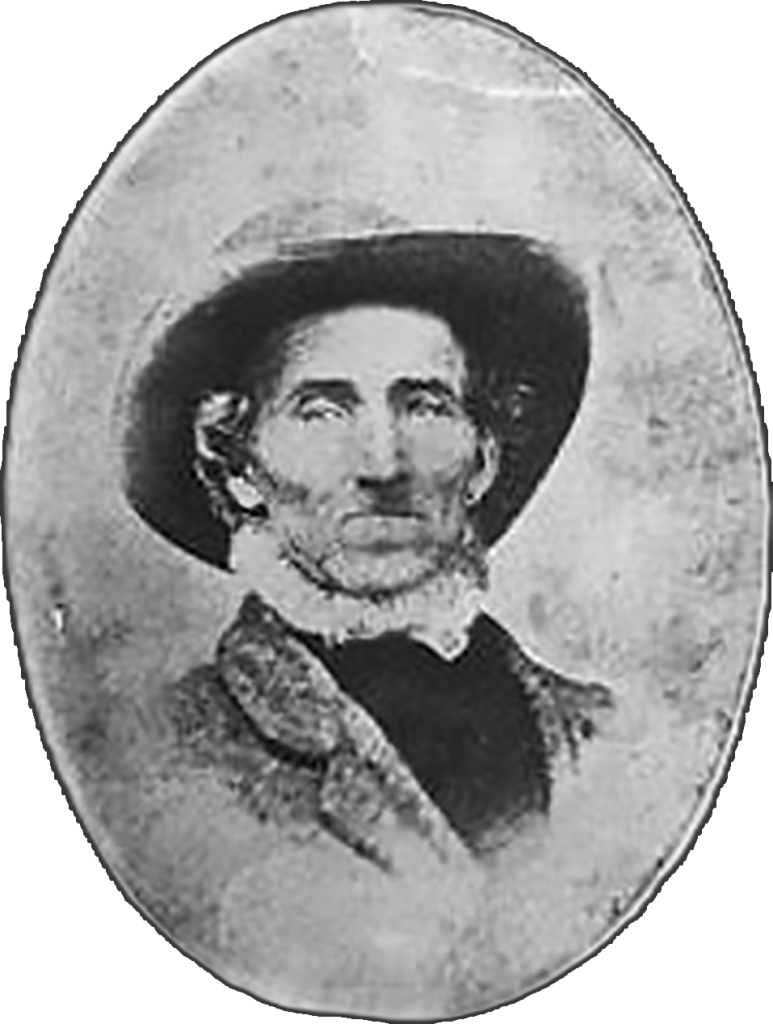
Jack Hinson’s transformation from respected landowner to feared Confederate sniper began with an act of Union brutality that would ignite one of the war’s most remarkable individual campaigns.
According to the exhaustive research of Tom McKenney, a descendent of Hinson’s, documented in his book Jack Hinson’s One-Man War, when Union troops led by Major L.B. Johnson brutally executed Hinson’s two sons in 1862—displaying their severed heads on Hinson’s fence posts—the 38-year-old farmer made a vow that would echo through military history. He commissioned a custom .50-caliber Whitworth rifle to be made and embarked on what historians now recognize as the most successful one-man guerrilla campaign of the Civil War.
A Rifle Ahead of Its Time

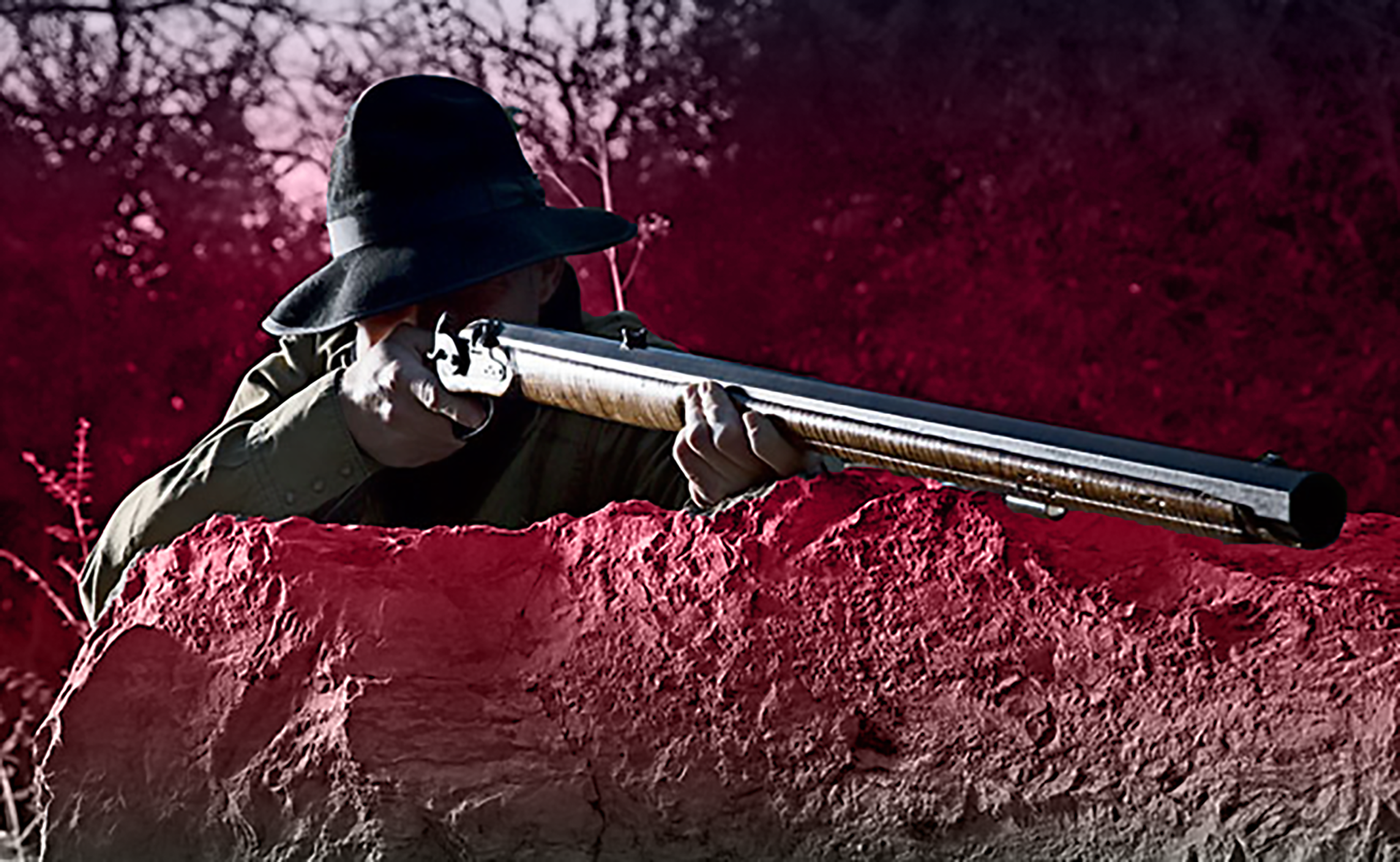
Central to Hinson’s legendary stature was that very gun: a one-of-a-kind British-made Whitworth rifle, widely considered the most accurate military rifle of the 19th century.
According to ballistics expert and Civil War firearms historian John Plaster, the Whitworth’s revolutionary hexagonal bore design and precision manufacturing made it capable of sub-MOA accuracy at ranges exceeding 1,000 yards—extraordinary performance for the 1860s.
The rifle featured a unique .451-caliber hexagonal bullet that rotated through the matching hexagonal rifling, creating exceptional stability and accuracy.
Historical records from the Confederate Ordnance Department, as documented by William A. Albaugh III in Confederate Handguns, indicate that Whitworth rifles could consistently hit man-sized targets at 1,500 yards—more than double the effective range of standard infantry rifles of the era.
Hinson’s particularly unique Whitworth was reportedly equipped with a Davidson telescopic sight, making him one of the first snipers to employ optical magnification in combat effectively. This combination of precision engineering and advanced optics transformed Hinson into what modern special forces operators would recognize as a one-man force multiplier.
A Campaign of Master Marksmanship and Terror
Over the course of his three-year crusade for justice, Hinson demonstrated marksmanship that military historians still study today. According to records compiled by the Tennessee State Archives and documented in McKenney’s research, Hinson was credited with over 100 confirmed kills, including numerous high-ranking Federal officers.
His methodology was surgical: he would position himself at extreme range, often 800-1,200 yards from his targets, and systematically work his way down the chain of command.
The psychological impact of Hinson’s exploits cannot be overstated. Union General Ulysses S. Grant—ironically, a pre-war friend and acquaintance of Hinson’s—was forced to deploy entire companies to hunt down this single marksman. Military dispatches from the National Archives reveal that at the height of his notoriety, over 300 Federal soldiers were deployed and solely tasked with capturing Jack Hinson by any means. There were none who succeeded.
Maritime History in the Making
Perhaps Hinson’s most extraordinary feat occurred along the Tennessee River, where he achieved an unsurpassed feat in maritime warfare history to this very day. According to naval records preserved in the Official Records of the Federal and Confederate Navies, Hinson single-handedly forced the surrender of the Union gunboat USS Tawah by systematically killing off the vessel’s entire officer core from his position on shore.
Witnesses reported that Hinson methodically shot the captain, first officer, and several crew members in succession, creating such panic among the remaining sailors that they raised a white flag rather than face continued decimation. This represents the only documented case in naval history of a vessel surrendering to a single man operating from land—a testament to both Hinson’s marksmanship and the psychological power of precision shooting.
The Whitworth’s Technical Supremacy
The technical specifications of Hinson’s Whitworth rifle reveal why it was so devastatingly effective.
According to period ordnance manuals preserved by the Smithsonian Institution, the rifle weighed approximately 9 pounds and measured 49 inches overall. Its 33-inch barrel featured the distinctive hexagonal rifling with a 1:20 twist rate, optimized for the specially-designed hexagonal bullets.
The rifle’s trigger mechanism was a masterpiece of 19th-century precision engineering, featuring a crisp 3-pound pull that allowed for the precise shot placement Hinson required.
Contemporary ballistics tests conducted by firearms historian Mike Venturino have demonstrated that well-maintained Whitworth rifles can still achieve groups under 2 inches at 200 yards—remarkable accuracy for any era.
Legacy of a Master Marksman
Hinson’s exploits embody many values that resonate deeply with today’s shooting community:
precision, dedication to craft, and the willingness to stand against overwhelming odds in pursuit of justice.
His story demonstrates how superior marksmanship, combined with tactical intelligence and unwavering resolve, can achieve results far beyond what conventional military thinking might suggest possible.
Modern precision rifle competitions and long-range shooting disciplines owe a debt to pioneers like Hinson, who proved that individual skill and the right equipment could change the course of military engagements. His techniques—careful range estimation, wind reading, and systematic target prioritization—remain fundamental principles taught as advanced marksmanship principles today.
Essential Reading for Every Gun Enthusiast
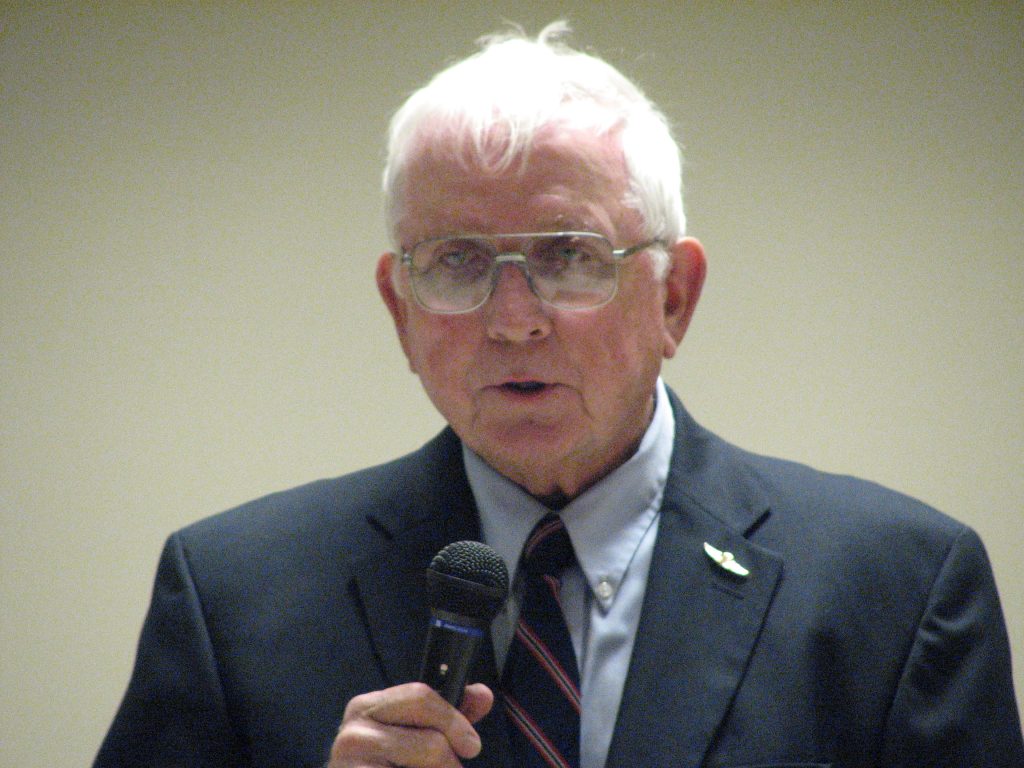
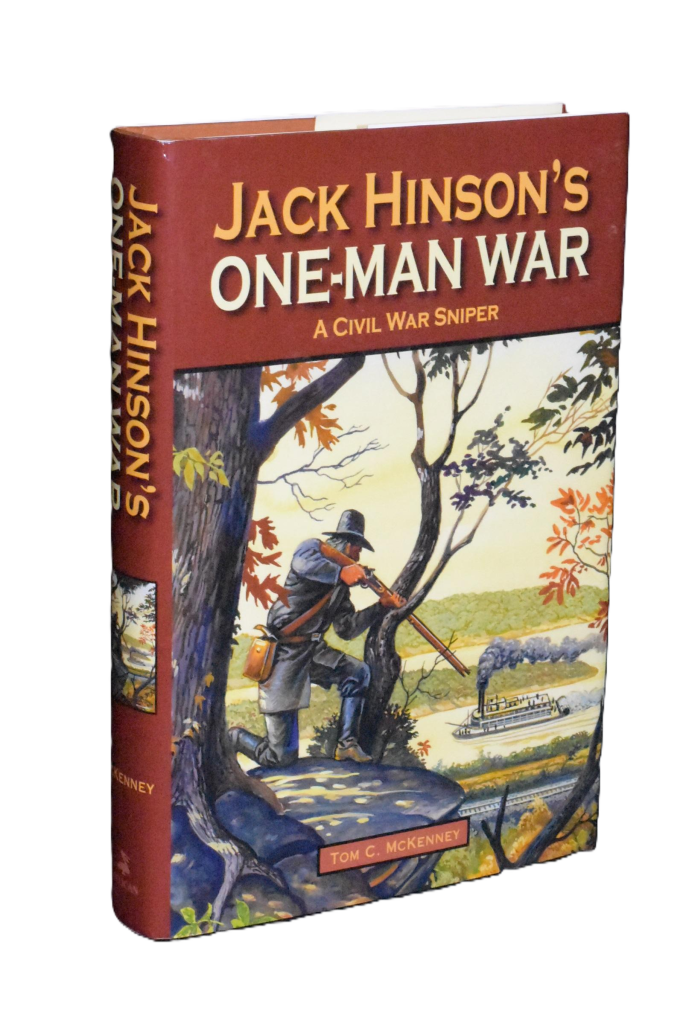
For those who who are fascinated and inspired by this story, Jack Hinson’s One-Man War by Tom McKenney stands out among a number of notable works on the topic as essential reading. This meticulously researched book by an actual descendant of Jack Hinson not only chronicles Hinson’s extraordinary exploits but provides detailed technical analysis of his equipment, tactics, and the ballistic challenges he overcame, which is of special interest to gun lovers.
McKenney’s book offers gun enthusiasts rare insight into 19th-century precision shooting, complete with technical specifications, ballistic data, and tactical analysis that will appeal not just to history buffs but to anyone interested in the evolution of long-range marksmanship. The author’s extensive use of primary sources—including military records, personal correspondence, and period technical manuals—makes this the definitive account of one of history’s greatest marksmen.
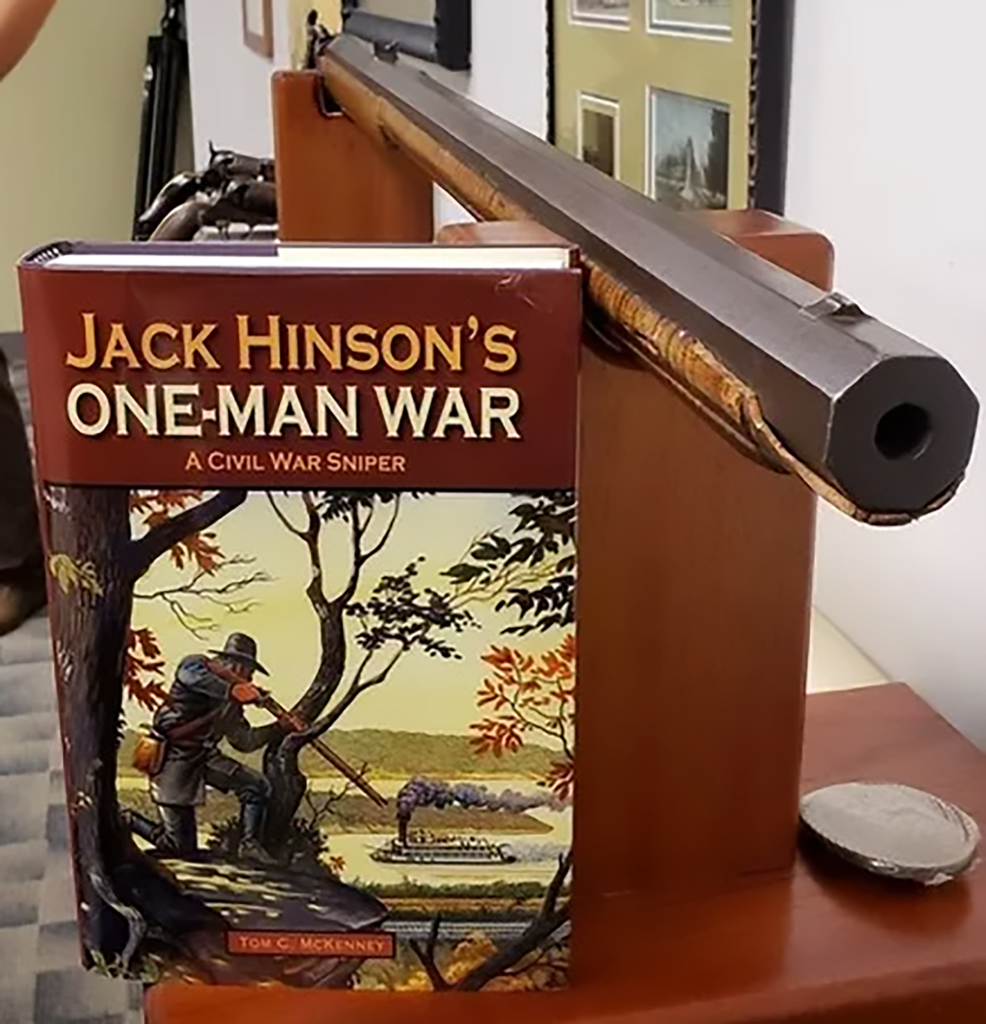
Jack Hinson’s legacy reminds us that in the right hands, with proper training and quality equipment, a single rifle can indeed change history. His story deserves a place of honor in every gun enthusiast’s library—and Jack Hinson’s One-Man War is the perfect way to discover why this Tennessee farmer became a legend in the shooting community throughout the whole world.