
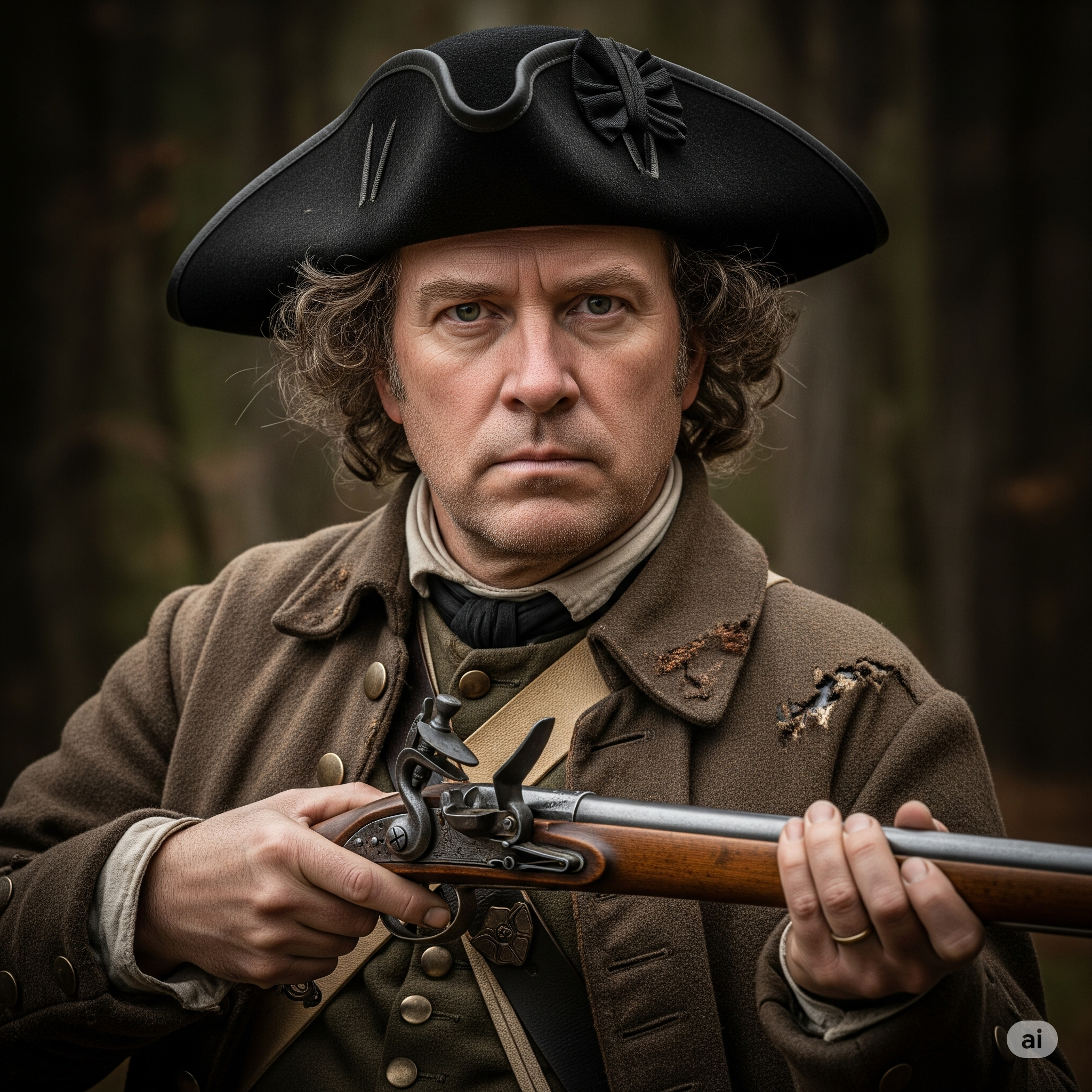
Bible, Buckskin, and Black Ops:The Benjamin Church Story
— Jacob Tyler —
When the smoke of musket fire first darkened New England skies in 1675, the settlers of Plymouth Colony found themselves ill-equipped for a war unlike any they’d faced. King Philip’s War—a brutal conflict between colonists and Native tribes—demanded a shift from the rigid, ceremonial European warfare to something far more fluid and cunning. Enter Benjamin Church, a devout Christian frontiersman who rewrote the rules of colonial combat and laid the blueprint for America’s future warriors.
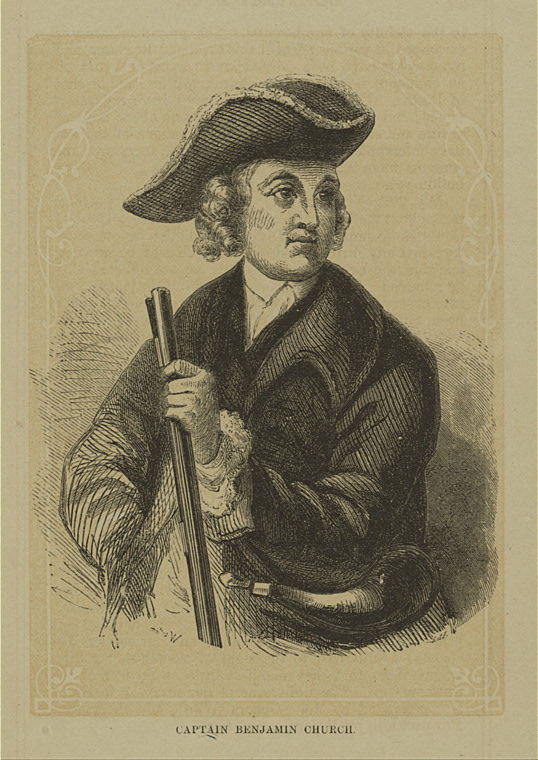
Born in 1639 in Plymouth Colony, the son of Richard Church and Elizabeth Warren—himself the maternal grandson of Mayflower passenger Richard Warren. Raised on the edge of the frontier, Church learned to hunt, trap, and survive in a land where every sunrise could bring either opportunity or calamity. In 1667, he married Alice Southworth, and the couple eventually settled in Little Compton, Rhode Island, where Church built relationships with local tribes long before war made them enemies.
Church’s life was steeped in Calvinist conviction. His faith wasn’t ornamental—it was operational. He believed in divine sovereignty, moral restraint, and the burden of righteous action. His memoir, Entertaining Passages Relating to Philip’s War (1716), reveals a man who saw warfare not as license, but as duty.
“Men must not delight in blood,” he wrote—which were no mere idle words, as his reputation for sparing non-combatants, avoiding unnecessary destruction, and punishing atrocities on both sides is well established.
Church’s legacy is documented in primary sources like his memoir (available via the Internet Archive) and supported by scholarly analysis from the Warfare History Network, Small State Big History, and Russell Yost’s popular American history website, The History Junkie. These sources consistently credit Church as the father of American ranging, whose tactics laid the groundwork for irregular warfare in North America.
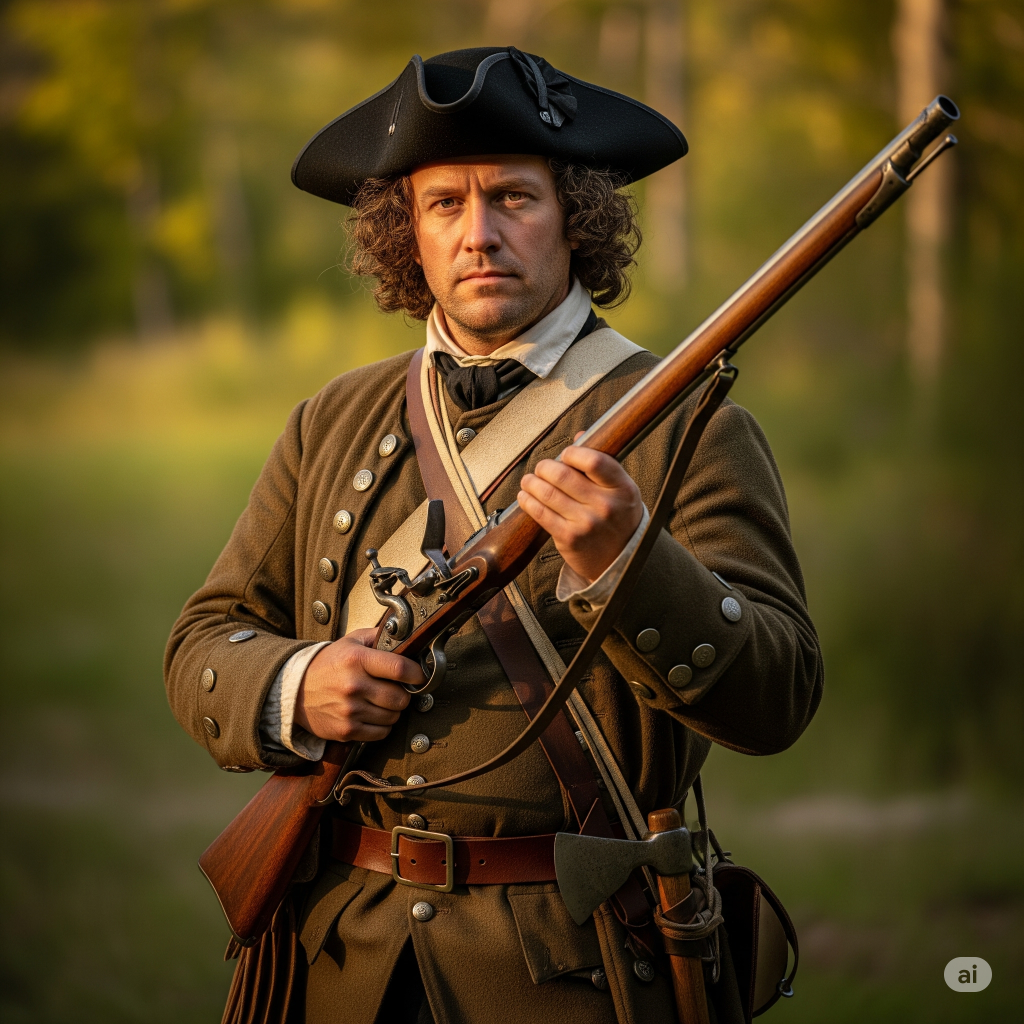
Church’s military career began in King Philip’s War (1675–1676), where he served as principal aide to Governor Josiah Winslow. Commissioned as a captain, he quickly realized that European-style formations were ineffective in the dense forests and swamps of New England. So he broke ranks—literally—and formed mixed-unit ranger teams of colonial militia and Native allies. These units conducted stealth raids, ambushes, and reconnaissance missions, often deep behind enemy lines.
His men were the first colonial force to successfully raid hostile camps in terrain that had long favored Native resistance. Church’s tactics were so effective that they crippled tribal forces, rescued captives, and saved countless colonial lives. His campaigns culminated in the death of Metacomet (King Philip), a decisive blow that ended the war and reshaped the frontier.
Church didn’t stop there. He led four expeditions into Acadia during King William’s War and Queen Anne’s War, targeting French settlements and hostile tribes like the Abenaki. His raids were meticulously planned, and his troops were trained in guerrilla-style warfare—a radical departure from the ceremonial combat of the time.
Church’s campaigns weren’t fueled by vengeance or conquest—they were driven by love of home and hearth, tempered by a deep sense of moral responsibility. He believed that victory was God-given, not man-earned, and that just action demanded both courage and conscience. His Calvinist worldview framed every campaign as a test of obedience and stewardship.
He proved that effective defense required not just muscle but moral resolve—faith sharpened by strategy. Today, as debates swirl around the nature of security and civic duty, Church’s legacy reminds us of a sobering truth: to truly love what you’re charged to protect, you must be prepared to do terrible things—and have the strength to hold that power in check. It calls to mind the words of contemporary Canadian philosopher Jordan Peterson:
“A harmless man is not a good man. A good man is a very, very dangerous man who has that under voluntary control.”
Church didn’t fight for glory—he fought because home and order demanded it. In that, he became the living embodiment of that principle: a dangerous man, tempered by duty, guided by faith, and willing to act with ferocity not for personal gain—but for love of home and hearth. As such, he is not just the sort of man who made this country great, but the sort Americans today must emulate if we’re to make it great again.